

In part one of this series we wrote about the opportunity AI opens up for small businesses. This time we want to talk about the other side of the coin, because the sessions on fraud and security at Africa Tech Festival 2026 were some of the most practical we attended, and honestly some of the most sobering.
The scam no longer looks like a scam
Steve Jump of Custodiet Advisory Services opened the fraud session with a picture we all recognise, scams used to give themselves away with bad spelling and a long-lost prince who needed your help. Not anymore.
“Today, the grammar is perfect. And the voice really does sound like the CFO.”
Kerissa Varma, Chief Security Advisor for Microsoft in the Middle East and Africa, admitted that even after a long career in security a well-crafted lure could still catch her. Her worry is that attackers are adopting AI faster than defenders, so we cannot expect the person at the front desk to spot every fake on their own.
David Loxton of Loxton Forensics summed it up in one line that we have repeated to a few clients since, criminals are "no longer hacking systems, they're hacking trust." A WhatsApp voice note from the boss, an email from a supplier with new bank details, an urgent call that seems to know your children's names, these are the new front doors.
Most "AI attacks" are really process problems
This was the part that changed how we think about it. David pointed out that many attacks described as sophisticated are really broken processes, or workplaces where staff are told to obey instead of question, such as a junior who releases a payment because the instruction looked like it came from the top. He even mentioned a recent breach in Australia that was publicised as AI-discovered, where the weaknesses had been waiting to be fixed for about two years.
His advice for Monday morning was to "create a culture of questioning", where even the most junior person can challenge an instruction without fear. Kerissa added a question every owner should ask, how long does it take to switch off a staff member's access after they leave? If the answer is days or weeks, that is where trouble gets in.
She also made a point about blame that we appreciated, too often people who click a bad link are "persecuted, not educated." A team that is afraid to admit a mistake will hide it, a team that is supported will report it early, and early is everything.
You can't protect what you can't see
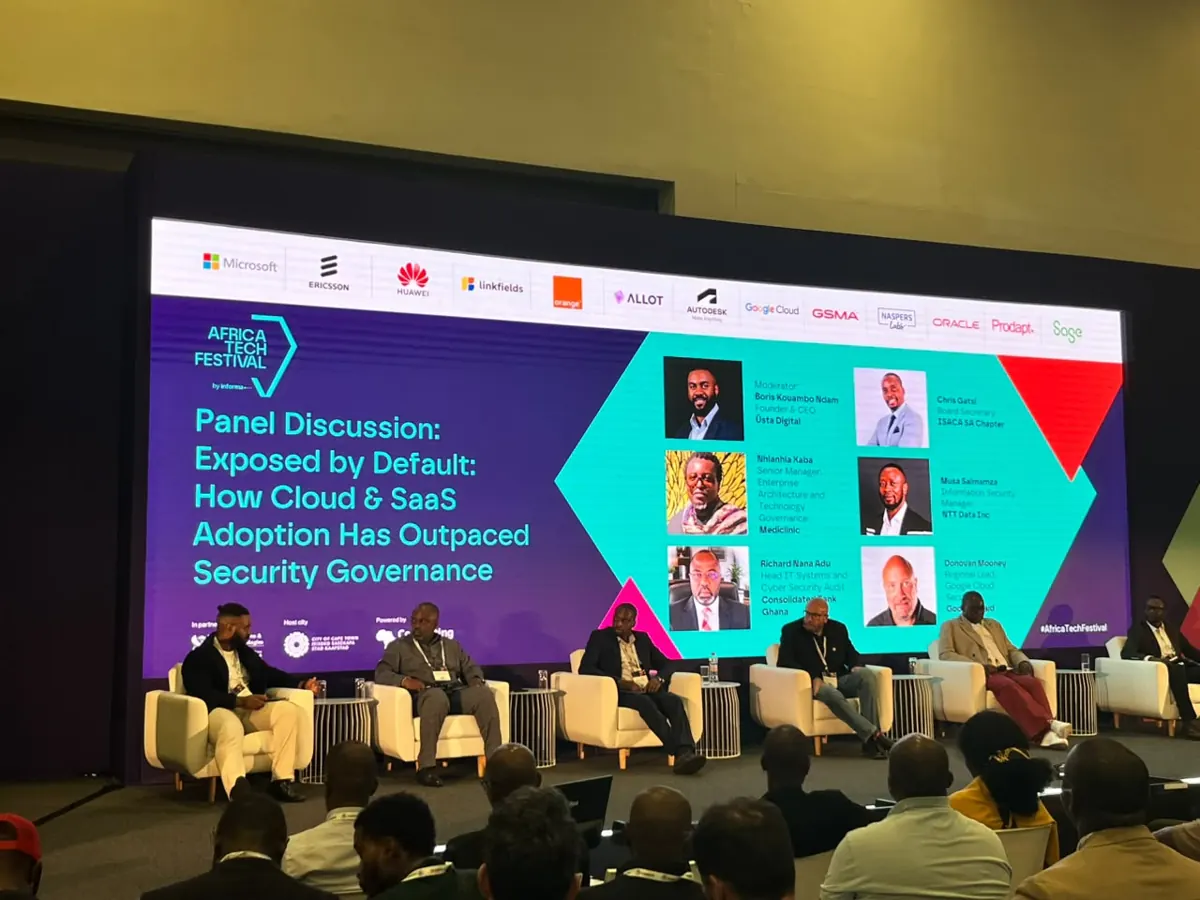
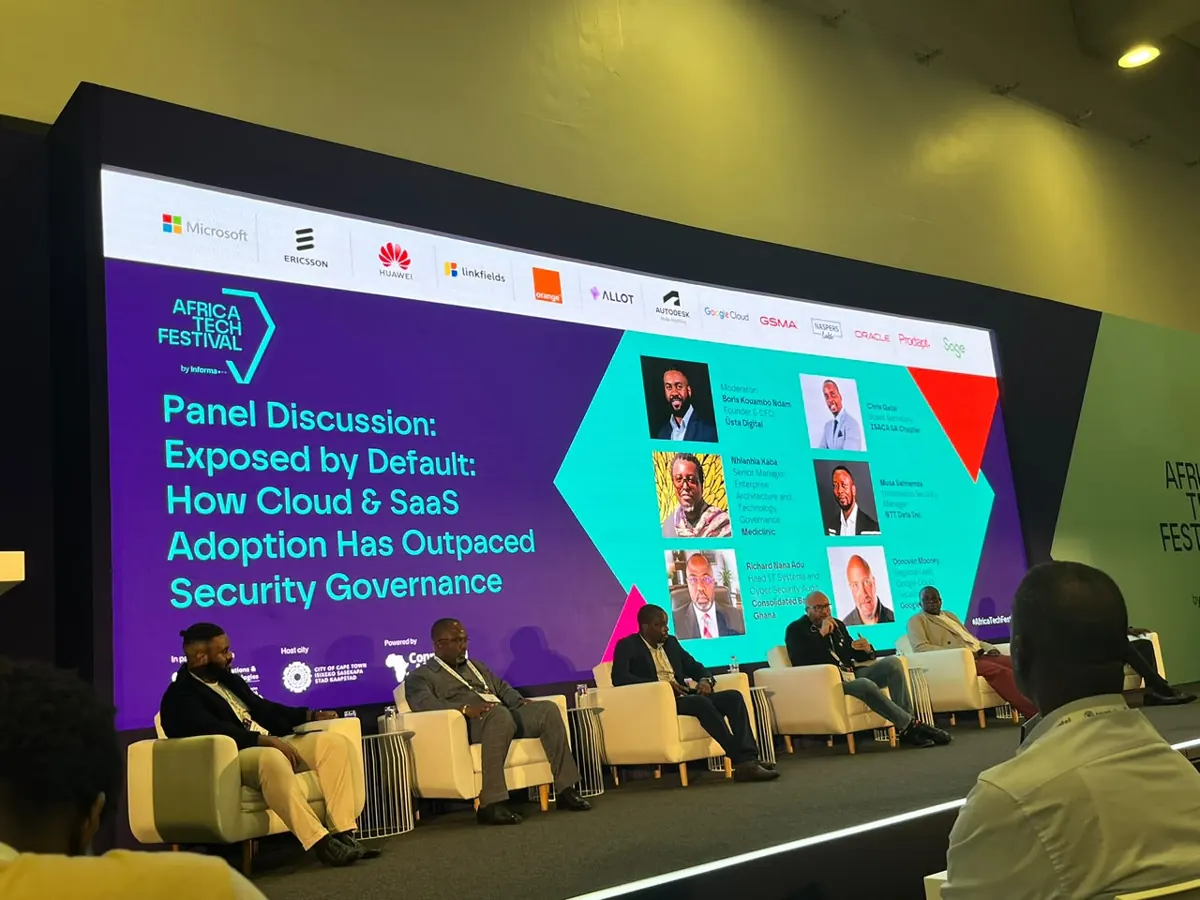
The Exposed by Default panel looked at what happens when a business signs up for cloud apps faster than it keeps track of them. Chris Gatsi of ISACA South Africa described how accounts and servers set up "just for testing" get forgotten, with nobody reviewing who still has access, and he gave us a line we won't forget soon.
“What is most permanent in IT is the temporary solution.”
He described protection like "a balanced diet", a mix of prevention, detection and being able to recover, because "no one is immune." Nhlanhla Xaba of Mediclinic was just as direct, "if your governance doesn't work, nothing is going to work," meaning someone has to own the list of systems you use and the risks that come with each one.

Your apps and AI tools are the new front door
Musa Salmamza of NTT Data suggested a review of identity and consent within 30 days, check which outside apps can reach your email, files and accounts, which AI tools have been given access, and what your team has signed up for without telling anyone. "You'll be surprised what you find," came the warning, and we believe it.
Donovan Mooney of Google Cloud added that security depends on knowing what each app or AI bot is doing, what it is allowed to do, and whether it has guardrails. Richard Nana Adu of Consolidated Bank Ghana spoke about alerts that fire and get waved away with "that's normal", and moderator Boris Kouambo Ndam closed with a simple truth, "you don't know what you don't know," so you have to go looking on purpose.
A 30-day plan for your business
None of this needs a big budget, it needs an afternoon and some honesty. In the next 30 days, make a list of every app, AI tool and online account your business uses, with the name of the person responsible for each one. Remove access for anyone who has left, and close any test accounts or trial tools you no longer need.
Turn on two-step sign-in, meaning a code on your phone as well as a password, for email, banking and accounting first. Then agree one rule with your team and write it down, any request to change bank details or make an unusual payment gets confirmed with a phone call to a number you already have, no matter who it seems to come from.
At WH Ventures every automation we build touches client data, so we build these basics in from the start, with named owners, limited access and checks on unusual payments. If you would like a second pair of eyes on your setup, request a quote or WhatsApp us on 071 329 9902.
Part three of this series arrives on 30/11/2026, it looks at connectivity and why customers pay for outcomes, and part four rounds the series off on 02/12/2026.
Want the next one in your inbox? We send one short email a week with AI news and practical tips for owners. Join the newsletter
